Gardy’s Mill Pond meeting leads to heated reactions

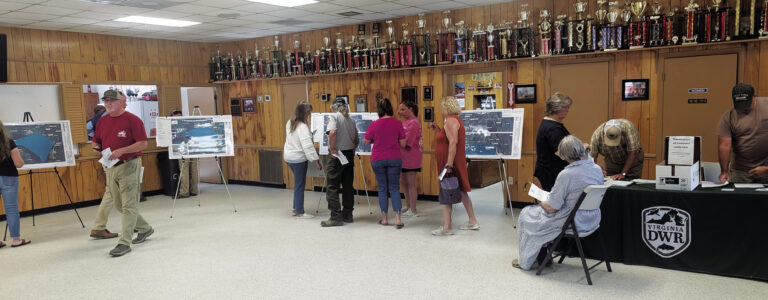
On May 28, the Department of Wildlife Resources (DWR) held a public comment meeting at the Callao Fire Department to review possible solutions for Gardy’s Mill Pond and its dam. The 75-acre pond is located on the Northumberland-Westmoreland county line, with the boat ramp area located on the Westmoreland side. It is the only public pond in Northumberland County.

On May 10, 2025, DWR was notified by VDOT of a possible breach in the dam. DWR staff were immediately dispatched to the site and observed erosion occurring around a box culvert emergency spillway on the dam. DWR then notified the state dam regulatory authority, the Virginia Department of Conservation and Recreation (DCR), and began efforts to lower the upstream reservoir water level below that of the breach to limit further damage to the dam.

The road across the dam was closed. Then, on May 11, 2025, DWR issued an emergency declaration for the imminent failure of the dam. DWR also closed the public boat ramp and parking lot at the pond. The public was advised to stay clear of the area and avoid recreating on the water.

A breach was created in the dam to lower the water level below the damaged area so engineers could conduct a full inspection. This allowed them to determine the best course of action for making the dam safe and moving forward with repairs.

The meeting provided an opportunity for DWR to present its findings and discuss the steps needed moving forward. Residents were upset that DWR had created a breach in what they described as a “perfectly good dam.” DWR staff did their best to explain why the action was necessary. Residents also raised concerns about the original agreement that transferred ownership of the pond to DWR, arguing that the agency is responsible for maintaining the dam.

DWR presented four options for moving forward, and residents were not pleased with any of them.

Option 1 would be to do nothing and leave the area as it is, with the boat ramp and roadway remaining closed. This would effectively make the pond unusable to the public and would involve no additional cost.

Option 2 would leave the pond at its current level and remove the roadway and bridge on the dam. The boat ramp and fishing pier would be extended to reach the water, allowing public access to continue. The estimated cost of this option is $1.8 million.

Option 3 would involve replacing the dam and bringing it into compliance with current regulations. This would include widening the structure and constructing a new spillway near the current one while eliminating the emergency spillway. The road across the dam would not be replaced. The estimated cost of this option is approximately $6.3 million.

Option 4 would include constructing a replacement dam that meets current standards, relocating the spillway to the center of the structure, and replacing the road across the dam. The estimated cost of this option would exceed $7.7 million.

While residents were not thrilled with any of the options and preferred that the existing dam simply be repaired, DWR must comply with current laws and regulations. Tempers flared because of the community’s love for Gardy’s Mill Pond and the belief among some residents that DWR was not honoring the agreement made when the agency assumed control of the property. The possibility of legal action against DWR was also discussed.

Becky Gwynn, the executive deputy director, did her best to answer questions and assure residents that DWR was only presenting options and gathering public input. No decision has been made. The process will take time, and as with any major project, funding remains the biggest challenge.

DWR is underfunded. The state does not fully fund the agency. In addition, because of various exemptions offered by the state, DWR does not receive the full share of certain federal grant funds. It is estimated that DWR would receive an additional $12 million annually without these exemptions. The DWR Board discussed the issue during its annual budget meeting on May 20 as part of the Finance, Audit, and Compliance Committee meeting.

Despite historically steady revenues, the agency has also faced budget shortfalls due to inflation and the rising costs of conservation efforts and fish-stocking programs. DWR’s budget relies heavily on dedicated state sales tax revenues, which the General Assembly can redirect to other government priorities.