Sigsbee Visits Reedville

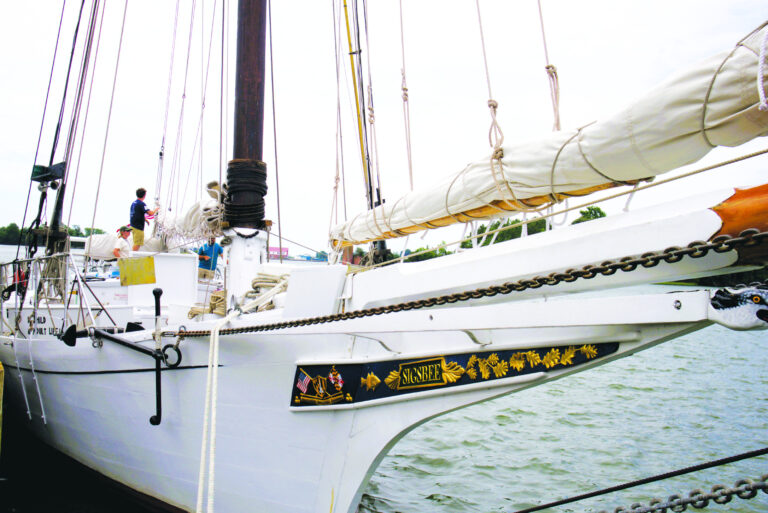
Last week, the 75-foot Sigsbee made its first ever visit to Reedville on a route that began in Tangier and included stops in Onancock, Cape Charles, and Smithfield.
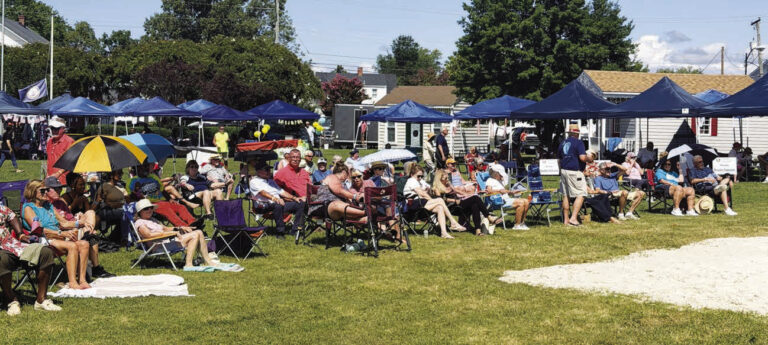
Hosted by the Reedville Fishermen’s Museum (RFM), the Sigsbee offered two days of free deck tours that attracted approximately 140 people—a number that astounded the crew, RFM reported.
Built in 1901, the Chesapeake Bay skipjack served as an oystering vessel for 88 years and is now part of the Living Classrooms fleet, offering on-deck, hands-on education in science and history, specifically focusing on the War of 1812.
One of the lessons the crew was eager to share was the history of skipjacks.
Skipjacks were dayboats built specifically for oystering after Maryland passed a law barring oyster harvests using motors and instead requiring sail power. Virginia didn’t impose the same restrictions, allowing a wider range of boats for dredging, the crew explained.
The Sigsbee currently has a four person crew—a captain, mate, and two deckhands— but an oystering skipjack would typically have carried six: a captain and five workers responsible for lowering and lifting the dredges. Oysters were dumped directly onto the deck—no containers, no storage. When the deck was full, the crew returned to town to sell the harvest, they explained.
As a backup source of power, skipjacks traveled with a pushboat that was raised or lowered on the stern to help push the vessel through the water when needed.
At one time, more than 1,000 skipjacks sailed the Bay. Today, only a handful survive, including the Claud W. Somers at RFM.
After leaving Reedville, the Sigsbee was destined for Solomons Island, MD, as it made its way back to its home port in Baltimore.
Most of its time is spent educating on the water is in the northern end of the Bay. “Generally speaking, if you’re on the Patapsco River in Baltimore and you see a skipjack, most likely it’s us,” a crew member said.