SPANBERGER’S COLLECTIVE BARGAINING VETO EASES KING GEORGE’S CONCERNS, STINGS UNIONS
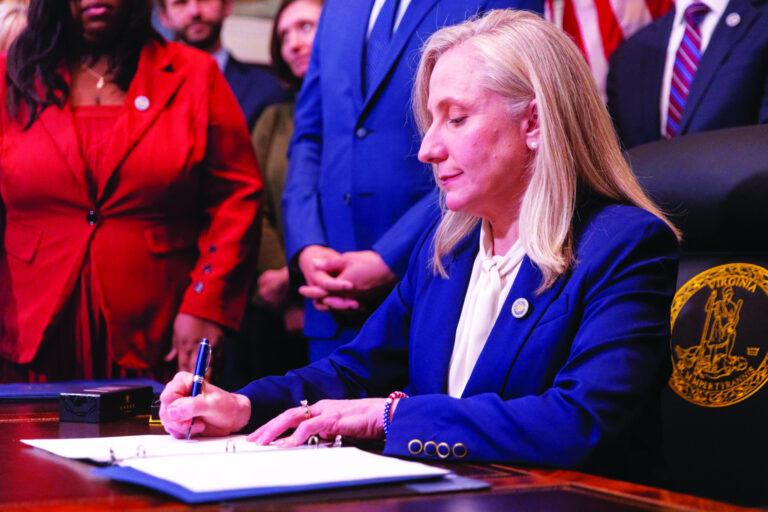
Governor Abigail Spanberger’s veto of public sector collective bargaining legislation last Thursday helped King George County eliminate a financial concern, at least for now, but it also triggered swift and backlash from some Virginia’s unions, including the county’s firefighters.
King George Opposed
In March, Board Chairman David Sullins presented a letter from the Virginia Association of Counties (VACo) urging localities to oppose the legislation and to communicate that opposition to both the Governor and the General Assembly. A majority of the board immediately supported taking action.
“I support us doing something,” said Supervisor Ken Stroud, noting he had already emailed delegates to oppose the bills. “Anything we can do to oppose it, I’m for.”
Supervisor Cathy Binder raised concerns about the financial burden the legislation could impose on localities. “Richmond area counties have said this could possibly have an impact of over 30 cents on your taxes,” she said.
“To all of a sudden have to fund all this — and it’s just been kind of rammed through without a lot of thinking about the impact on the locality. Whether you support it or not, there needs to be a little more thought before it goes into action. Even 2028 could be too quickly for a lot of small counties,” she added.
Although the VACo request arrived that same evening, Sullins urged the board to act immediately. Most supervisors agreed the matter required urgency, voting 4–1 to direct the county administrator to prepare a letter opposing the bills. Supervisor Bryan Metts cast the dissenting vote, saying he had not been given enough time to fully consider the issue.
Earlier this month, David Rose of Davenport — the county’s financial advisory firm — warned the board that they needed to start preparing for the future costs of collective bargaining. He said the measure would create “a real cost for local governments” and warned it would be a factor in difficult times ahead for King George.
Spanberger’s Veto
While King George’s opposition was expected, Spanberger’s veto was not. Her decision drew sharp criticism from unions and labor advocates who had viewed her as an ally.
Spanberger initially sought amendments to the SB 378 and HB1263 that would have delayed implementation from 2028 to 2030, phased in certain categories of workers first, and added involvement of a state board.
The General Assembly rejected her changes. Spanberger then issued a veto — a move union leaders described as blindsiding.
“Governor Spanberger’s decision to veto public sector collective bargaining is a betrayal of Virginia’s workers who were promised change,” SEIU International leaders said in a statement. “Governor Spanberger looked workers in the eye, met with our members, affirmed her support, and made a promise. Today, she broke it.”
Robert L. Bragg III, President of the Virginia Professional Fire Fighters (VPFF), echoed that sentiment. “Since the very beginning of her campaign, we supported the Governor because of her past support of workers and her promise to correct the decades long issue of public sector collective bargaining. Her promises to us, and all workers, turned out to be hollow and nothing more than campaign rhetoric.”
VPFF leaders also criticized Spanberger for attempting to “water down” the legislation with her amendments. According to the organization, “she has chosen to side with the small anti worker minority, not the pro worker majority of her own political party.”
The King George Professional Firefighters & Paramedics IAFF Local 4438 issued a statement aligning with VPFF and added “disappointment over the Governor’s decision to turn her back on Virginia firefighters and working families across the Commonwealth.”
The group also criticized the King George Board of Supervisors — with the exception of Supervisor Metts — for voting to oppose the legislation.
“Local 4438 believes public servants deserve leaders who support workers’ rights, fair representation, and the ability for firefighters and paramedics to have a voice in their workplace,” the statement said. “These decisions send a discouraging message to the firefighters, paramedics, police officers, teachers, and public employees who dedicate their lives to serving the citizens of Virginia every day.”
Defending Her Position
In her veto statement, Spanberger insisted she still supports establishing collective bargaining rights for public sector employees.
“Public servants should have the same right to collectively bargain that Virginia’s private sector workers have,” she said.
She argued that her proposed amendments were intended to strengthen the legislation and ensure its successful implementation.
“I put forth amendments which would have required the state to set up a system allowing state employees, home care workers, and higher education service employees to enter into collective bargaining agreements first, in order to demonstrate the efficacy of this new system, with public employees in localities following closely after,” Spanberger said.
“My amendments would have also provided additional flexibility for public employers to take into account existing local budget timelines and processes. However, the General Assembly rejected these amendments. I believe additional amendments are needed to the enrolled bill currently before me.”
Spanberger suggests there could still be future for public collective bargaining under her leadership.
“I’ve been clear in my desire to be a governor who signs that bill into law but also clear in my mandate, which is to get it right as the chief executive…” she told reporters in Fairfax last week.