Workforce Development Board announces realignment with Gloucester

The Bay Consortium Workforce Development Board (BCWDB) is preparing for a federally required regional realignment that will add Gloucester County to the region that includes the Northern Neck. The change is intended to better reflect commuting patterns, employer relationships, and economic ties across the area.
Jackie Davis, executive director of the Bay Consortium Workforce Development Board, briefed the Northumberland Board of Supervisors earlier this month, outlining the reasons for the shift and the benefits it is expected to bring.
BCWDB serves 16 jurisdictions, including Fredericksburg, the Northern Neck, Middle Peninsula and Eastern Shore and is responsible for ensuring that workforce training and employment initiatives meet the economic development and business needs of the region.
The realignment is part of a long standing federal process under the Workforce Innovation and Opportunity Act (WIOA), which requires periodic review and adjustment of workforce regions to match economic and labor market conditions.
“These designations determine how workforce funding flows, how services are delivered, and how effectively we can support local businesses and job seekers,” Davis explained.
What’s Changing
Under the proposed realignment, Accomack and Northampton counties on Eastern Shore will leave the Bay Consortium region and shift to the Hampton Roads workforce region, while Gloucester—currently part of Hampton Roads— will join the Bay Consortium region.
“This adjustment better reflects commuting patterns, employer relationships, and economic ties,” Davis said, noting that the shift aligns the region more closely with real world economic connections, including where residents commute for work and where businesses draw their labor force.
Workforce dollars from the federal government flow through designated regions. If a region is not properly aligned and approved, Davis warned, it risks delays, restrictions, or even loss of funding flexibility.
To finalize the change, federal and state policy requires a formal charter agreement approved by the localities. The charter outlines which localities belong to the region, how governance works, how funds are managed and shared, and how accountability is maintained across jurisdictions.
Why It Matters
Davis explained the realignment is important for three major reasons: funding stability, program effectiveness, and local control.
The shift is intended to better serve local employers and residents—meaning faster connections to jobs, more support for local industries, and a more cohesive regional approach. “Our economy does not operate by county lines,” Davis told the Board.
Bringing Gloucester into the Bay Consortium strengthens the region’s footprint, giving it more influence in state level decisions, better positioning for grants, and stronger partnerships with education and industry.
Davis stressed that the realignment will not diminish the role or influence of participating counties.
“This change will not reduce Northumberland’s voice,” she said. “Our local elected officials remain part of the governing structure and continue to guide priorities.”
She also emphasized that local oversight remains intact. Northumberland still has a seat on our local elected official consortium with county administrator Luttrell Tadlock and assistant county administrator Drew Bayse as the representatives.
Northumberland also has a board seat, which is held by a business representative but it was vacant as of the meeting and they were looking for business representative to serve, Davis reported.
Davis also assured the Board that the realignment wouldn’t reduce services, such as business services and the Title One Adult Dislocated Worker and Youth Training Services. She said that this year, seven people from Northumberland have already received training in healthcare, welding, and IT costing $24,000.
Once all affected localities approve the charter, the realignment will be sent to the Governor’s Office for final designation. Davis said the goal is to move forward “without disruption to services or funding.”
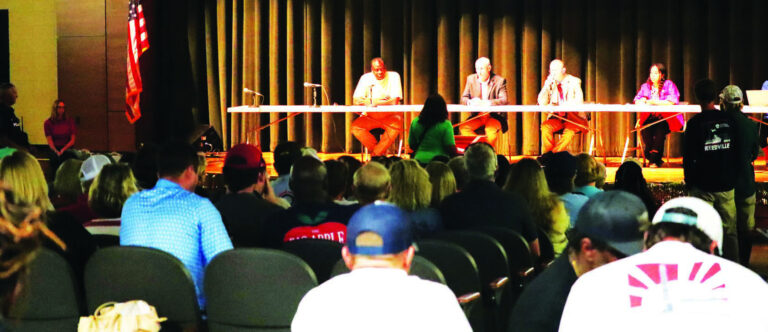
Photo: BCWDB