Efforts underway to boost Colonial Beach tourism

Colonial Beach has been a tourism- heavy town since its inception in the late 1800s. That much goes without saying. The spirit of the resort town has remained strong over the years, and residents are looking for ways to bring more and more tourists in, particularly to the beach and the downtown area.

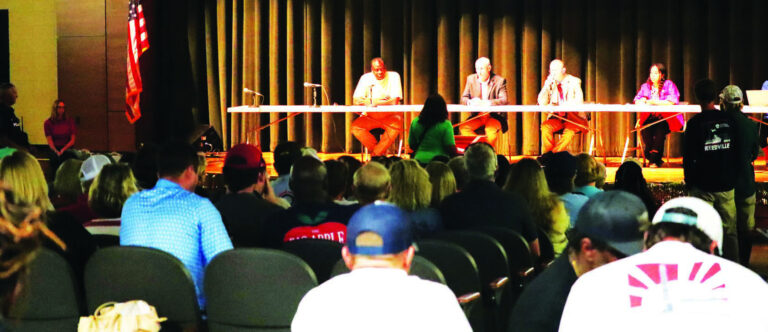
This year is shaping up to have one of the most important tourist seasons yet as the nation gets ready to celebrate its 250th birthday. At the Town Council meeting last week, Charlotte Cole, the Town’s Director of Economic Development & Tourism, gave a presentation on what a team of stakeholders is doing to strengthen the Town’s tourism pull.

“Compared to similar waterfront resort communities in Virginia, the level of preservation overall remains moderate-to-strong, and that’s something we can be very proud of,” explained Cole. “It’s a significant draw for visitors.”

According to a report that Cole cited, tourism was the leading industry in the Commonwealth in 2024, with 15 million visitors across Virginia spending over $35 billion and supporting almost 330,000 jobs. This also resulted in over $3 billion in state and local taxes.

“So as you can see from the numbers, tourism is a powerful economic development strategy,” Cole continued. “It boosts the local economy, generates jobs, and drives infrastructure investment by leveraging local assets. It acts as a catalyst for stimulating hospitality and retail while improving quality of life and fostering community pride.”

The question becomes: how much of this tourism money flows through Westmoreland County and Colonial Beach?

According to the statistics cited by Cole, Westmoreland saw about $38.7 million in visitor spending that year, with close to $21.7 million spent on lodging and $5.7 million each spent on food and retail, generating $2.9 million in state and local taxes.

“So that sounds pretty impressive, but consider this,” said Cole. “Cape Charles, another small rural waterfront community, experienced $261.6 million in visitor spending in 2024.”

Her list of examples didn’t end there. New Bern, North Carolina, for instance, saw visitors shelling out $183 million during their trips there.

That raises the question: what do those places have that is missing from Colonial Beach and Westmoreland County? According to Cole, the answer is a simple one: marketing.

“Both Cape Charles and New Bern have a cohesive, consistent tourism marketing program, and have for quite some time,” noted Cole. “We have historically suffered from a lack of an effective targeted marketing program. Combine that with inconsistent communication of local attractions, and you get the decline in Colonial Beach tourism.”

Cole cited research documents from the Virginia Tourism Corporation, noting that local businesses have often struggled with reduced foot traffic and visibility in Colonial Beach. She pointed out that the Town had historically relied on limited attractions—such as the beach, the pier, and gaming— without adapting to modern marketing strategies that could “highlight the area’s charm.”

Cole and her associates are focused on changing that. The first order of business for the Economic Development & Tourism Program is to get some visibility for Colonial Beach. To that end, the Town’s first fully functional tourism stakeholder group was established in October of last year. Subgroups are focusing on Town interests—from history, heritage, arts, and culture to outdoor experiences.

“The subgroups’ jobs are to identify compelling messages, develop itineraries, and guide the creation of targeted marketing tactics,” explained Cole. “We’ve created an embraceable brand, highlighting all that is special about Colonial Beach—our beach, our river, our bay, marinas, the friendly atmosphere, the quaint and quirky creative community, our historic sites, and amazing natural surroundings.

“This initial effort was created pro bono by several longstanding tourism marketing professional colleagues.”

Thanks to these efforts, Cole and her group are building the 2026 marketing campaign around two central themes: discovery and wonder.

Another major project is the revamping of the Town’s website. As it happens, the increasing usage of AI has hindered “VisitCBVA” because search bots decide “CB” must mean Chesapeake Bay.

Even with an interim URL titled “Discover Colonial Beach,” the Town’s website is “a little bit dull and uninspiring,” according to Cole. The revamp aims to create something that uses vivid narrative and imagery to tell the Town’s story.

May is the tentative release date for the new website.

In the meantime, ads—both digital and printed—are in the works, with the goal of driving up tourism between the Town and its primary markets, such as D.C., Richmond, and the Fredericksburg metropolitan area. There is also a VA250 collaboration with both the state and Westmoreland County underway. Cole gave recognition and thanks to the members of her team: Karen Grisevich of Grow RVA, Patti Woodsite of the Boathouse, Jennell Johnson from CB Tiki Cruises, Kelly Woods Vaughn of the Riverview Inn, and many more from around the Town and the County.

Councilwoman David Williams had some observations and questions.

“I know economic development’s been a big topic for the Town for quite some time,” stated Williams. “We hear the bad more than the good, but one of the complaints I have heard from people that get here is that there’s not much for them to do. I don’t know what we can do to bring more entertainment here, but is there anything in the works to gather more things for people to do here?

“I know people could go to Washington’s Birthplace or Westmoreland State Park, but I’m talking about inside the Town itself. A couple of years ago, there was talk about a boat rental or charter, a fishing charter, and stuff like that. I don’t know if this ever came to fruition, but if they did, they would be a great advertisement for the Town.”

“What you describe is a classic chickenand-egg situation,” replied Cole. “A lot of tourism destinations wrestle with that depending on the cycle they’re going through. For us, we’re pretty much invisible in the marketplace, so it’s really difficult to call on potential charter businesses or dinner cruises or even land-based attractions to come to a community where you don’t have the numbers to support it. We have to build capacity first.”

This does have a silver lining, however, according to Cole. A number of people, having heard about the start of this initiative, have begun reaching out. As a result, several things are in the works, though it’s too soon for any real specifics.

“We hope that next year we’ll be able to come back to you and report that the numbers have had significant growth.”