Pilot study announced as possible step toward Bay-specific menhaden data
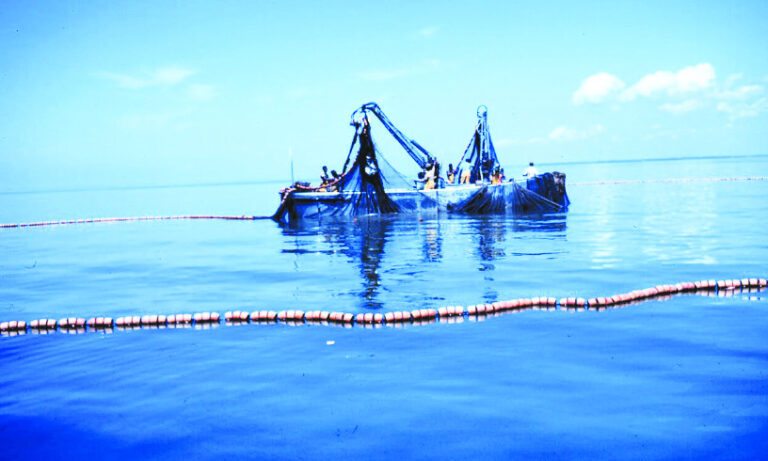
Critics of commercial menhaden fish‑ing in the Chesapeake Bay have called for Bay-specific science. The Science Center for Marine Fisheries (SCEMFIS) announced a pilot is advancing that may be able to provide it.
SCEMFIS announced that a research team is preparing to test whether a method called Passive Integrated Transponder, or PIT tag‑ging, can help fill key data gaps.
PIT tags are tiny devices inserted into fish, and when those fish later pass a detection point, the tag can be read—allowing scientists to track data such as movement, survival, and other patterns.
The pilot builds on a broader effort launched last fall, when SCEMFIS funded a “research roadmap” project. That project is aimed at answering questions such as abundance and availability to predators, while also identifying the studies needed to support a more scientif‑ically grounded harvest limit for menhaden in the Bay. Final recommendations, including proposed study designs and methods, are expected by the end of this year.
“Tagging is one potentially promising option available to us to establish a Bay cap that is grounded in the best available science,” said Dr. Genny Nesslage, an asso‑ciate research professor at the Chesapeake Biological Laboratory who is leading the roadmap effort.
The current Chesapeake Bay harvest cap for Atlantic menhaden is 51,000 metric tons. That limit has been chopped down over the past two decades but is based largely on his‑torical catch averages rather than Bay-specific biological data, according to SCEMFIS.
Because menhaden are important both eco‑nomically and ecologically, the accuracy of the Bay cap has become a central issue in the debate over commercial fishing in the Bay.
Supporters of the industry have argued that science shows the species is not overfished and overfishing is not occurring. Critics, including some conservation groups and legislators, argue the Bay is a unique environment that needs its own localized data.