Free Clinic expands, getting busier, but isn’t requesting increase in local funding
Although the Northern Neck–Middlesex Free Health Clinic (NNMFHC) reported a very busy and productive prior year that included hiring, expanding services, and strengthening partnerships, the organization didn’t ask for any increase in funding from Lancaster in the FY27 budget.

New Hires & Expanding Services

Trying to find healthcare professionals to come to the area and stay has been challenging, explained NNMFHC CEO Jeannie Nelson, but last year the clinic made several important hires for positions that are paid competitive wages with benefits.

On December 30, the clinic added a two day nurse practitioner, allowing expansion of medical services to a five day operation. With that addition, on some days, there are three providers and volunteers.

On August 1, the clinic hired its first full time dentist, and that department still has a part time dentist and full time hygienist. So, in addition to continuing to provide dentures, the clinic now offers crowns, bridges, and night guards—“a major important part,” said Nelson.

NNMFHC has also formed a partnership with a free clinic based in Hampton Roads that is doing NNMFHC’s labs at minimal cost. Nelson said many patients have reported a positive impact on being able to get jobs because it has allowed their smiles to be corrected.

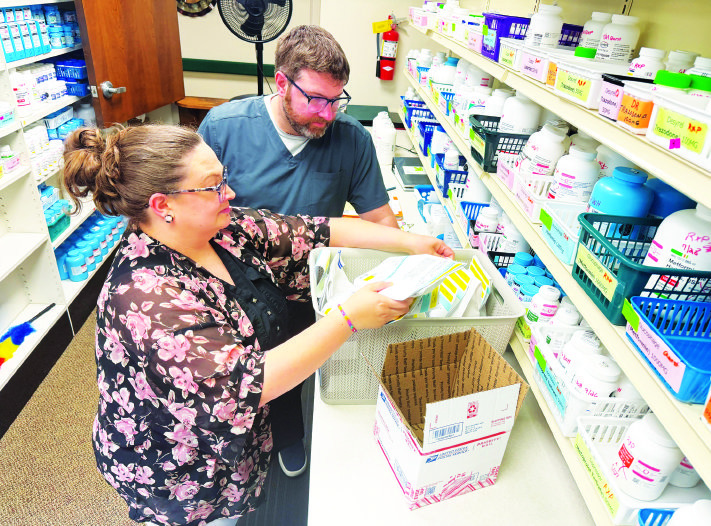
Last year, the NNMFHC added a full time pharmacist—a search that had been underway for at least 20 years, according to Nelson. That addition allowed pharmacy operations to expand from a 2½ day to a 5 day operation.

NNMFHC’s pharmacy hire came at a time when the Lloyd Moss Free Clinic—which provided medications to small clinics—suddenly shut down. With the 5 day operation, NNMFHC was able to step in and form a partnership with the Richmond based nonprofit Rx Partnership (RxP) to take on the role of a Central Fill Pharmacy. NNMFHC is now a regional hub that receives bulk medications and fills prescriptions for six other clinics.

Nelson explained that not only does the pharmacy partnership bring in revenue, but it opened the path to contracts that provide free medicines used to serve local patients and those at other clinics.

“It’s been a big reduction in our pharmacy costs, which has helped offset the pharmacist position,” she explained. “It was another creative, out of the box way to be able to support the needs of these [local] communities by pushing out in a different angle, which we had never done before.”

Leveraging Alliances

With clinics across the state forming alliances, staff from the Roanoke based Bradley Free Clinic recently came to Kilmarnock for a site visit focused on exploring ways they could also partner with RxP to serve free clinics across Southwest Virginia.

“We are having to think outside of the box with a regional approach to meet growing need,” said Nelson. “By partnering with RxP and collaborating with organizations like Bradley, we’re able to remove barriers and create solutions for better healthcare access.”

NNMFHC has also followed in Bradley’s footsteps by adopting the HOPE Initiative that Bradley launched more than a decade ago, becoming the first clinic to replicate the program. That initiative includes having two peer recovery specialists who are also trained community health workers supporting patients with issues such as substance use and mental health disorders.

Nelson explained that those peer recovery specialists are in Lancaster Jail weekly and serve some in regional jail. They also work with people after they’re released, following them through recovery and assisting with navigating various systems and challenges, such as getting on Medicaid and getting their driver’s license back.

Impact & Funding

Meanwhile, with the funding change to the Affordable Care Act, the clinic is now seeing patients who have dropped their health insurance because they can’t afford it. And Nelson said the “biggest cliff” is expected to be in 2027, when changes are coming that are expected to be major for the uninsured population. She acknowledged that healthcare is going to be challenging going forward.

However, the clinic seeks 25% of its $2.5 million budget from the counties its serves. In a memo to the County, Nelson said Lancaster received over 33% of the clinic’s services last year, which would generally lead to a request for $210,236, but the clinic is happy to receive the same amount as last year—$176,988.